Delving into Remote Work Burnout: Prevention and Wellness Strategies, this introduction immerses readers in a unique and compelling narrative, with a casual formal language style that is both engaging and thought-provoking from the very first sentence.
As we navigate the intricacies of remote work burnout and its impact on mental health, it becomes evident that understanding the signs, factors, prevention, and wellness strategies is crucial for maintaining a healthy work-life balance.
Understanding Remote Work Burnout
Remote work burnout refers to the state of physical, mental, and emotional exhaustion caused by excessive and prolonged work done remotely. This can have a significant impact on employees' mental health, leading to decreased productivity, increased stress levels, and overall dissatisfaction with work.
Common Signs and Symptoms of Remote Work Burnout
- Feelings of exhaustion and fatigue even after resting
- Decreased motivation and productivity
- Difficulty concentrating and making decisions
- Increased irritability and mood swings
- Insomnia or disturbances in sleep patterns
Differences between Traditional Workplace Burnout and Remote Work Burnout
While traditional workplace burnout and remote work burnout share similarities, there are key differences to note. Remote work burnout may stem from feelings of isolation, blurred boundaries between work and personal life, and the lack of social interactions that are more prevalent in a traditional office setting.
Additionally, remote work burnout can be exacerbated by the constant use of technology and the challenges of setting clear work hours and boundaries.
Factors Contributing to Remote Work Burnout
Isolation plays a significant role in contributing to remote work burnout. Working remotely can often lead to feelings of loneliness and disconnection from colleagues, which can impact one's mental well-being and overall job satisfaction.
Impact of Blurred Boundaries between Work and Personal Life
The blurred boundaries between work and personal life in a remote work setup can exacerbate burnout. When the physical separation between work and home is diminished, individuals may find it challenging to switch off from work, leading to increased stress, fatigue, and ultimately burnout.
Lack of Social Interactions in Remote Work Environment
The absence of regular social interactions that typically occur in a traditional office setting can also contribute to burnout among remote workers. Human connection and social support are essential for maintaining mental health, and the lack of face-to-face interactions in a remote work environment can lead to feelings of isolation and disengagement.
Prevention Strategies for Remote Work Burnout
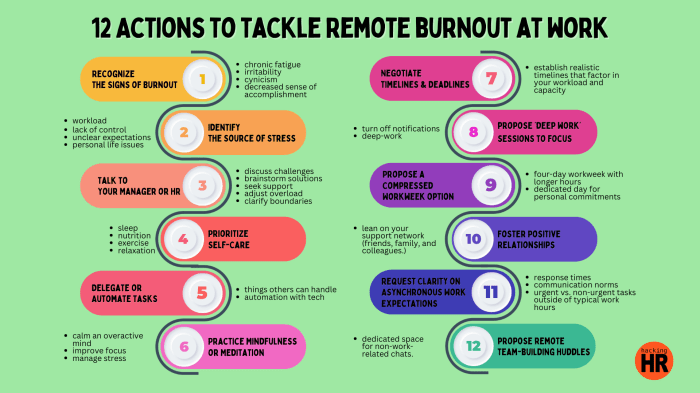
Remote work burnout can be prevented by implementing various strategies that prioritize well-being and work-life balance. Setting boundaries, taking breaks, and maintaining a healthy balance are key to avoiding burnout.
Setting Boundaries Between Work Hours and Personal Time
One effective way to prevent burnout is to establish clear boundaries between work hours and personal time. This can include defining specific work hours and sticking to them, as well as creating a designated workspace that is separate from areas used for relaxation or personal activities.
Importance of Taking Regular Breaks During Remote Work
Regular breaks are essential for maintaining productivity and preventing burnout. Encourage employees to take short breaks throughout the day to rest their minds and bodies. This can help reduce stress levels and improve focus when returning to work tasks.
Significance of Maintaining a Healthy Work-Life Balance
A healthy work-life balance is crucial in preventing burnout. Encourage employees to prioritize self-care activities outside of work, such as exercise, hobbies, and spending time with loved ones. Balancing work responsibilities with personal time can help reduce stress and improve overall well-being.
Wellness Strategies for Remote Workers
Maintaining wellness is crucial for remote workers to prevent burnout and ensure productivity. Here are some effective strategies to promote mental and physical well-being while working remotely.
Mindfulness Techniques for Stress Reduction
- Practice deep breathing exercises to calm the mind and reduce stress levels.
- Engage in meditation sessions to improve focus and concentration throughout the day.
- Take short breaks to stretch, walk, or simply relax to clear the mind and reset.
Benefits of Physical Exercise in Remote Work Routine
Regular physical activity not only boosts physical health but also enhances mental well-being. Incorporating exercise into a remote work routine can:
- Improve mood and reduce feelings of anxiety or depression.
- Enhance cognitive function and productivity by increasing blood flow to the brain.
- Boost energy levels and overall job satisfaction, leading to better work performance.
Creating a Conducive Workspace at Home
A well-designed workspace can significantly impact mental well-being and productivity. Consider the following tips to create an environment that promotes focus and positivity:
- Choose a quiet and well-lit area with minimal distractions to enhance concentration.
- Invest in ergonomic furniture and accessories to support good posture and prevent physical discomfort.
- Add elements of nature, such as plants or natural light, to create a calming and refreshing atmosphere.
Closure
In conclusion, the importance of recognizing and addressing remote work burnout cannot be overstated. By implementing prevention and wellness strategies, individuals can strive for a more sustainable and fulfilling remote work experience.
General Inquiries
What are some common signs of remote work burnout?
Common signs include increased fatigue, decreased productivity, feelings of isolation, and difficulty concentrating.
How can setting boundaries help prevent remote work burnout?
Setting boundaries helps delineate work hours from personal time, reducing the risk of burnout from overworking.
Why is maintaining a healthy work-life balance important in preventing burnout?
Maintaining a healthy work-life balance ensures that individuals have time for rest, relaxation, and activities outside of work, which are essential for mental well-being.
What are some mindfulness techniques that remote workers can use to reduce stress?
Mindfulness techniques such as deep breathing exercises, meditation, and yoga can help remote workers alleviate stress and improve focus.
How does lack of social interactions in a remote work environment contribute to burnout?
Lack of social interactions can lead to feelings of loneliness, isolation, and a sense of disconnection, which are risk factors for burnout.