Beginning with Critical Illness Cover vs Life Insurance: Which Is More Essential?, the narrative unfolds in a compelling and distinctive manner, drawing readers into a story that promises to be both engaging and uniquely memorable.
In this comparison between Critical Illness Cover and Life Insurance, we will explore the differences, benefits, and financial implications of each, shedding light on which option may be more essential for your needs.
Critical Illness Cover vs Life Insurance Overview
When it comes to financial protection, both critical illness cover and life insurance play crucial roles in safeguarding individuals and their families. Critical illness cover is designed to provide a lump sum payment if the policyholder is diagnosed with a serious illness covered by the policy, such as cancer, stroke, or heart attack.
This financial support can help cover medical expenses, ongoing care, or even lifestyle adjustments due to the illness.
On the other hand, life insurance offers financial protection to beneficiaries in the event of the policyholder's death. It provides a lump sum payment to the designated beneficiaries, helping them cope with the loss of income and other financial obligations.
Life insurance can also be used to pay off debts, cover funeral expenses, or secure the financial future of dependents.
Differences between Critical Illness Cover and Life Insurance
- Coverage: Critical illness cover pays out upon diagnosis of a specified serious illness, while life insurance pays out upon the death of the policyholder.
- Usage: Critical illness cover is intended to cover medical expenses and lifestyle adjustments due to illness, whereas life insurance is primarily used to provide financial security to beneficiaries after the policyholder's death.
- Benefit: Critical illness cover provides a lump sum payment to the policyholder upon diagnosis, while life insurance provides a lump sum payment to beneficiaries after the policyholder's death.
- Survival: Critical illness cover benefits the policyholder while they are alive and dealing with a serious illness, whereas life insurance benefits the policyholder's beneficiaries after their death.
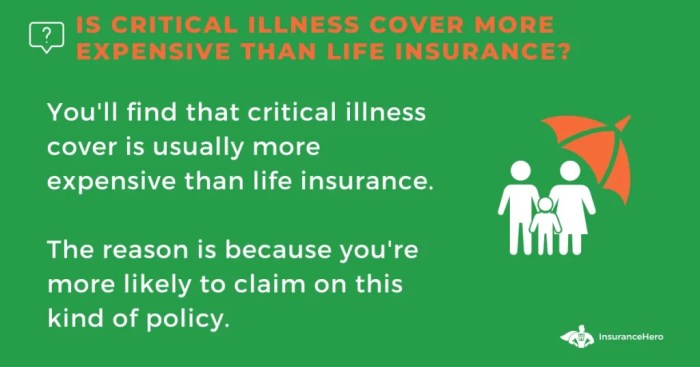
- Cost: Critical illness cover premiums are typically higher due to the higher likelihood of a critical illness diagnosis, while life insurance premiums are generally lower since the payout is contingent on the policyholder's death.
Coverage and Benefits
When it comes to critical illness cover and life insurance, understanding the coverage and benefits of each can help you make an informed decision about which option is more essential for you and your loved ones.
Types of Illnesses Covered Under Critical Illness Policies
Critical illness cover typically provides protection against a range of serious illnesses that can have a significant impact on your health and well-being. Some common illnesses covered by critical illness policies include cancer, heart attack, stroke, organ transplant, and major organ failure.
It's important to carefully review the policy to understand the specific illnesses covered to ensure you have the necessary protection in place.
Benefits Provided by Critical Illness Cover
Critical illness cover offers a lump-sum payment if you are diagnosed with a covered illness, providing financial support to help cover medical expenses, ongoing care, and other financial obligations. This lump sum can offer peace of mind during a challenging time, allowing you to focus on your recovery without worrying about the financial implications of your illness.
Coverage Options and Benefits Associated with Life Insurance
Life insurance, on the other hand, provides a death benefit to your beneficiaries upon your passing. This benefit can help replace lost income, cover funeral expenses, pay off debts, or provide financial security for your loved ones. Additionally, some life insurance policies offer living benefits, such as cash value accumulation or the option to access funds in case of a terminal illness diagnosis.
Financial Protection
Critical illness cover and life insurance both play a crucial role in providing financial protection to individuals and their loved ones in different circumstances. Let's delve into how each of these options offers financial security in their own unique ways.
Critical Illness Cover
Critical illness cover provides a lump sum payment to the policyholder upon diagnosis of a specified critical illness covered by the policy. This financial support can help cover medical expenses, ongoing care, and other financial obligations that may arise during the treatment and recovery period.
Additionally, the lump sum payment can also be used to replace lost income if the policyholder is unable to work due to the illness.
- Offers financial support upon diagnosis of a critical illness
- Helps cover medical expenses and ongoing care
- Provides a lump sum payment to replace lost income
Life Insurance
Life insurance, on the other hand, offers financial security to beneficiaries in the event of the policyholder's death. The policy pays out a lump sum amount to the designated beneficiaries, providing them with financial support to cover living expenses, mortgage repayments, education costs, and other financial needs.
This ensures that the family members are financially protected and can maintain their standard of living even after the policyholder's passing.
- Provides financial support to beneficiaries upon the policyholder's death
- Helps cover living expenses, mortgage repayments, and education costs
- Ensures beneficiaries are financially protected and can maintain their standard of living
When comparing the financial implications of having critical illness cover versus life insurance, it's essential to consider the specific needs and circumstances of the individual. Critical illness cover offers financial protection in the event of a critical illness diagnosis, ensuring that the policyholder receives the necessary financial support during a challenging time.
On the other hand, life insurance provides peace of mind to beneficiaries by offering financial security after the policyholder's death, helping them cope with the financial impact of losing a loved one. Both types of insurance serve distinct purposes in providing financial protection, and the choice between the two depends on individual preferences and needs.
Premiums and Costs
When it comes to critical illness cover and life insurance, understanding the premiums and costs involved is crucial in making an informed decision. Let's delve into the factors that influence premiums for critical illness cover, discuss the cost implications of purchasing life insurance, and compare the affordability of these two types of insurance.
Factors Influencing Premiums for Critical Illness Cover
- Age: Younger individuals typically pay lower premiums for critical illness cover compared to older individuals.
- Health Status: Pre-existing medical conditions can increase premiums, while a clean bill of health may result in lower costs.
- Sum Assured: The higher the coverage amount, the higher the premium for critical illness cover.
- Occupation: Riskier occupations may lead to higher premiums due to the increased likelihood of illness or injury.
Cost Implications of Purchasing Life Insurance
- Term Length: The longer the term of the life insurance policy, the higher the premiums are likely to be.
- Age and Health: Similar to critical illness cover, age and health play a significant role in determining life insurance premiums.
- Smoking: Smokers generally face higher premiums compared to non-smokers due to the associated health risks.
- Policy Type: Whole life insurance policies tend to have higher premiums than term life insurance policies.
Affordability of Critical Illness Cover vs Life Insurance
- Critical Illness Cover: While critical illness cover premiums can vary based on several factors, they are generally more affordable than life insurance premiums.
- Life Insurance: Life insurance premiums tend to be higher due to the longer coverage period and the broader scope of benefits provided.
- Comparison: In terms of affordability, critical illness cover may be a more cost-effective option for individuals looking for financial protection against specific critical illnesses.
Suitability and Considerations
When it comes to deciding between critical illness cover and life insurance, it is essential to consider various factors to determine which option is more suitable for your individual circumstances. Let's delve into the key considerations for both types of insurance to help you make an informed decision.
Considerations for Critical Illness Cover
Critical illness cover is designed to provide financial support in the event of a serious illness. Here are some factors to consider when determining the suitability of critical illness cover:
- Health History: Your personal and family health history can help assess the likelihood of developing a critical illness. If you have a history of illnesses that are covered by the policy, critical illness cover may be suitable for you.
- Income Protection: Critical illness cover can help replace lost income if you are unable to work due to a serious illness. Consider whether this financial protection is important for you and your family.
- Medical Expenses: Critical illnesses often come with high medical costs. Having critical illness cover can help alleviate the financial burden of medical expenses and treatments.
- Lifestyle: Your lifestyle choices and habits can also impact your risk of developing a critical illness. Consider whether your lifestyle warrants the need for additional financial protection through critical illness cover.
Factors for Life Insurance Coverage
Life insurance provides a financial safety net for your loved ones in the event of your death. Here are some factors to consider when deciding on life insurance coverage:
- Dependents: Consider the financial needs of your dependents, such as children or a spouse, and ensure that the life insurance coverage is sufficient to support them in your absence.
- Debts and Expenses: Life insurance can help cover outstanding debts, mortgage payments, and funeral expenses, providing peace of mind for your loved ones during a difficult time.
- Income Replacement: If your income contributes significantly to your family's financial stability, life insurance can help replace lost income and maintain their standard of living.
- Legacy Planning: Life insurance can also be used as a tool for estate planning and leaving a financial legacy for your beneficiaries.
Suitability Comparison
The suitability of critical illness cover versus life insurance ultimately depends on your individual circumstances and financial goals. If you are more concerned about protecting your income and covering medical expenses in the event of a serious illness, critical illness cover may be more suitable for you.
On the other hand, if your primary goal is to provide financial security for your loved ones after your death, life insurance may be the better option. Consider your health, lifestyle, financial responsibilities, and long-term objectives when deciding between critical illness cover and life insurance.
Final Summary
As we conclude our discussion on Critical Illness Cover vs Life Insurance, it becomes clear that both provide valuable financial protection, but the choice between the two ultimately depends on individual circumstances and priorities. By understanding the nuances of each, you can make an informed decision that safeguards your financial well-being in the long run.
FAQ
Is critical illness cover the same as life insurance?
No, critical illness cover provides a lump sum payment upon diagnosis of a specified illness, while life insurance provides a payout upon the policyholder's death.
Can I have both critical illness cover and life insurance?
Yes, it's possible to have both to ensure comprehensive financial protection for different scenarios.
Which is more expensive, critical illness cover or life insurance?
The cost depends on factors like age, health status, coverage amount, and policy terms. In general, critical illness cover can be more expensive due to the specific coverage it offers.
How do I determine which is more essential for me?
Consider your health, financial obligations, and dependents to decide whether critical illness cover or life insurance aligns better with your needs.