Delving into How to Start Living a Minimalist Lifestyle Without Feeling Deprived, this introduction immerses readers in a unique and compelling narrative, with casual formal language style that is both engaging and thought-provoking from the very first sentence.
The content of the second paragraph that provides descriptive and clear information about the topic
Benefits of Minimalist Living
Embracing a minimalist lifestyle can bring about a multitude of advantages that positively impact various aspects of our lives.Living with less can lead to mental clarity and reduced stress levels. By decluttering our physical space and simplifying our possessions, we create a more peaceful environment that allows us to focus on what truly matters.
This sense of clarity can help improve our overall well-being and mental health.
Financial Savings and Environmental Impact
- Minimalism can lead to significant financial savings by curbing unnecessary spending on material possessions. By prioritizing quality over quantity and mindful consumption, we can save money for more meaningful experiences or future investments.
- Moreover, living with fewer possessions can also reduce our environmental impact. By consuming less and avoiding unnecessary waste, we contribute to a more sustainable lifestyle that benefits the planet.
Tips for Decluttering and Simplifying
Decluttering and simplifying your living space is a key step towards embracing a minimalist lifestyle. It can be a daunting task, but with the right strategies, you can make the process easier and more manageable.
Step-by-Step Guide for Decluttering Different Areas of the Home
- Start with one area at a time: Begin decluttering one room or space before moving on to the next. This will help prevent feeling overwhelmed.
- Use the "Four Box Method": Label four boxes as "Keep," "Donate," "Trash," and "Store." As you go through your belongings, place each item in the corresponding box.
- Declutter by category: Instead of decluttering by room, tackle items by category (clothes, books, kitchen items) to see everything you own in one place.
- Set a timer: To avoid getting sidetracked, set a timer for a specific amount of time (e.g., 30 minutes) and focus on decluttering during that time.
Strategies for Letting Go of Sentimental Items Without Feeling Guilty
- Take a photo: If you have sentimental items you no longer need, consider taking a photo of them before letting go. This way, you can still cherish the memory without keeping the physical item.
- Keep only what truly matters: Identify the sentimental items that hold the most meaning to you and let go of the rest. Focus on quality over quantity.
- Donate to someone in need: Knowing that your sentimental items will bring joy to someone else can make it easier to part with them.
Resisting the Urge to Accumulate More Possessions After Decluttering
- Practice mindful consumption: Before making a purchase, ask yourself if the item truly adds value to your life. Consider whether you really need it or if it aligns with your minimalist goals.
- Implement a "one in, one out" rule: For every new item you bring into your home, let go of an existing item. This helps maintain a balance and prevents clutter from building up again.
- Avoid impulse buys: Take time to think about a purchase before making it. This can help you differentiate between genuine needs and impulse wants.
Designing a Minimalist Home
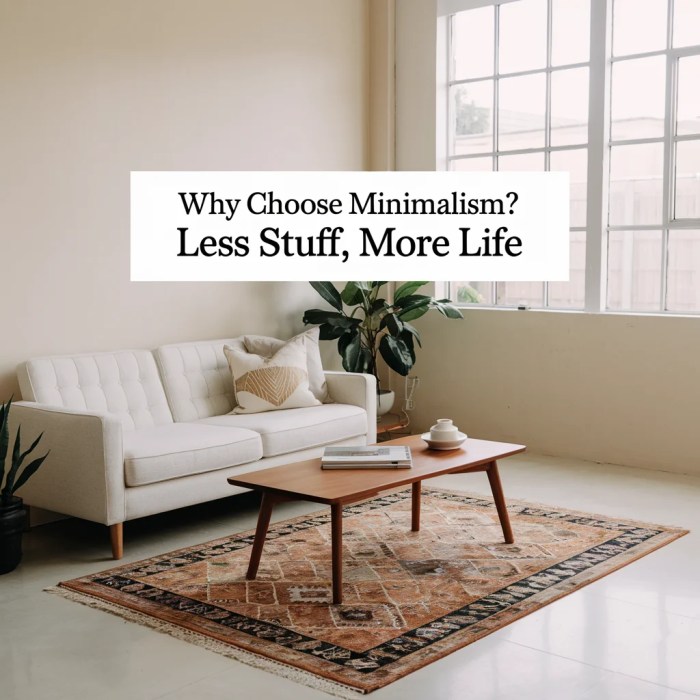
Creating a minimalist home involves simplifying your living space to focus on essentials while maintaining a sense of calm and functionality.
Characteristics of a Minimalist Home Design
- Clean lines and simple shapes
- Neutral color palette with pops of color for accent
- Minimal furniture with multifunctional pieces
- Lack of clutter and unnecessary decorations
- Ample natural light and open spaces
Examples of Minimalist Decor and Furniture Choices
- Low-profile bed frames and simple bedding
- Functional storage solutions like hidden cabinets or built-in shelves
- Sleek and unobtrusive lighting fixtures
- Minimalist artwork or wall decorations
- Houseplants for a touch of nature
Creating a Peaceful and Clutter-Free Living Space
To achieve a peaceful and clutter-free environment in your minimalist home, consider the following:
- Declutter regularly and only keep items that serve a purpose or bring you joy
- Organize belongings in designated storage areas to maintain a tidy space
- Avoid overcrowding rooms with unnecessary furniture or decorations
- Embrace negative space to create a sense of openness and tranquility
- Incorporate natural elements like wood or stone for a calming atmosphere
Mindful Consumption and Intentional Living
Living a minimalist lifestyle goes beyond decluttering physical possessions; it also involves being mindful of what we consume and intentionally choosing what adds value to our lives.
Practicing Mindful Consumption
Mindful consumption is about being conscious of our purchasing decisions, considering the impact they have on our lives and the environment. By adopting mindful consumption habits, we can avoid unnecessary spending and focus on what truly matters.
- Avoid impulse buys by taking time to think before making a purchase. Consider whether the item aligns with your values and if it will truly enhance your life.
- Practice gratitude for what you already have to prevent the desire for more things. Focus on appreciating the quality of your possessions rather than the quantity.
- Support ethical and sustainable brands that align with your values. Consider the environmental and social impact of your purchases.
Prioritizing Experiences Over Possessions
Intentional living involves valuing experiences over material possessions, focusing on creating memories and meaningful connections rather than accumulating things.
- Invest in experiences such as travel, learning new skills, or spending time with loved ones. These moments can bring lasting happiness and fulfillment.
- Shift your mindset from acquiring things to enjoying experiences. Consider how a new purchase contributes to your overall well-being and happiness in the long run.
- Practice gratitude for the intangible aspects of life, such as relationships, personal growth, and experiences that enrich your life in meaningful ways.
Final Review
The content of the concluding paragraph that provides a summary and last thoughts in an engaging manner
Top FAQs
What are the benefits of minimalist living?
Embracing a minimalist lifestyle can lead to mental clarity, reduced stress, financial savings, and less environmental impact.
How can I resist the urge to accumulate more possessions after decluttering?
To resist accumulating more possessions, focus on experiences over material things, and remind yourself of the benefits of a clutter-free space.
What is mindful consumption and its role in a minimalist lifestyle?
Mindful consumption involves being intentional with purchases, avoiding impulse buys, and prioritizing experiences over material possessions in a minimalist lifestyle.